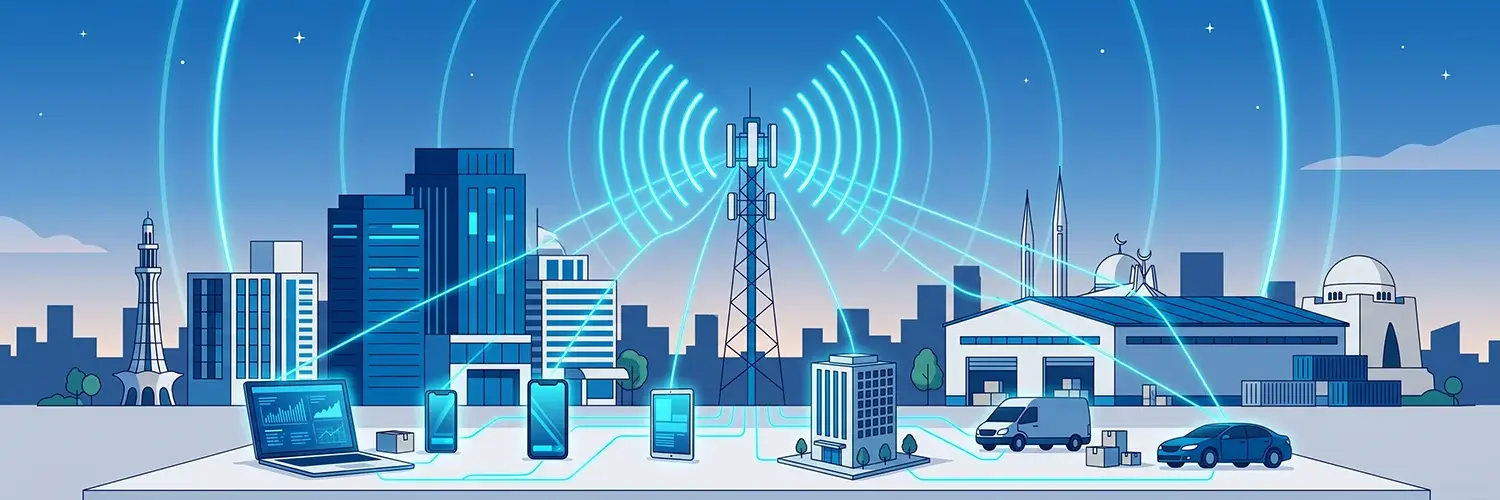
What Is 5G and How Will It Change Business Networking in Pakistan?
By Admin
15 Sep 2026
Businesses across Pakistan are watching mobile networks move beyond 4G and the question most decision makers keep asking is simple, what is 5G and does it actually matter for how we run operations? The answer goes well beyond faster phone speeds. For companies dealing with connectivity gaps, growing device counts and cloud heavy workflows, 5G changes the way offices, factories and service providers stay connected.
Table of Contents
- What Is 5G?
- 5G vs 4G: What Actually Changes
- Why 5G Matters for Business Networking in Pakistan
- Key Business Use Cases
- Challenges to Plan For
- Conclusion
- Frequently Asked Questions
Before getting into what 5G actually changes, it helps to know that speed alone will not fix a weak network. Most of the gains discussed here depend on having the right networking infrastructure in place to begin with, which is where planning ahead makes the biggest difference.
What Is 5G?
So, what is 5G exactly? It is the fifth generation of mobile network technology, built to carry far more data at much higher speeds than 4G while supporting many more connected devices on the same network at once. Where 4G was designed mainly around faster browsing and streaming, 5G was designed with machines, sensors and business systems in mind as much as phones.
It works by using higher frequency spectrum bands and a denser layout of small cell towers instead of relying on fewer, larger towers spread far apart. This setup allows data to travel faster over shorter distances with far less delay between sending and receiving.
Three qualities set 5G apart. Speeds that can reach several times what 4G offers, latency low enough for near instant responses between devices and the ability to connect a much higher density of devices in the same physical space without slowing down the network.
5G vs 4G: What Actually Changes for Businesses
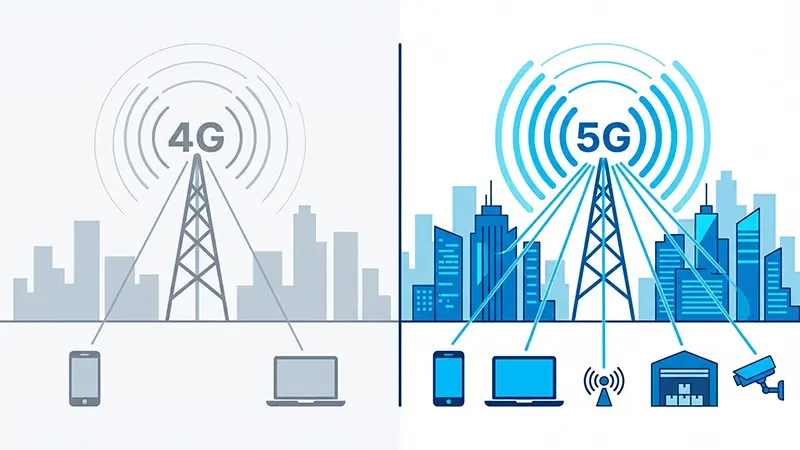
For most people, 4G already feels fast enough for browsing and calls, so the shift to 5G raises a fair question. What does it actually change for a business rather than a personal phone?
- Speed: Large files and cloud applications load and sync far faster
- Latency: Real time systems respond almost instantly instead of lagging
- Device density: Warehouses and factories can connect hundreds of sensors reliably
- Reliability: Networks stay stable even in crowded areas with heavy usage
These differences matter far more to a business running multiple connected systems than to someone scrolling social media on a commute.
Why 5G Matters for Business Networking in Pakistan
Pakistani businesses have long dealt with inconsistent fixed line connectivity in certain areas and 5G offers a genuine alternative for locations where laying fiber is slow or costly. A stable, high speed wireless connection can support offices, retail outlets and even temporary sites without waiting months for physical infrastructure to be installed.
As more companies in Karachi and other major cities depend on cloud platforms, video conferencing and remote teams, the underlying network becomes part of daily operations rather than a background utility. A faster, more reliable connection reduces the friction that slows down every day work.
Key Business Use Cases
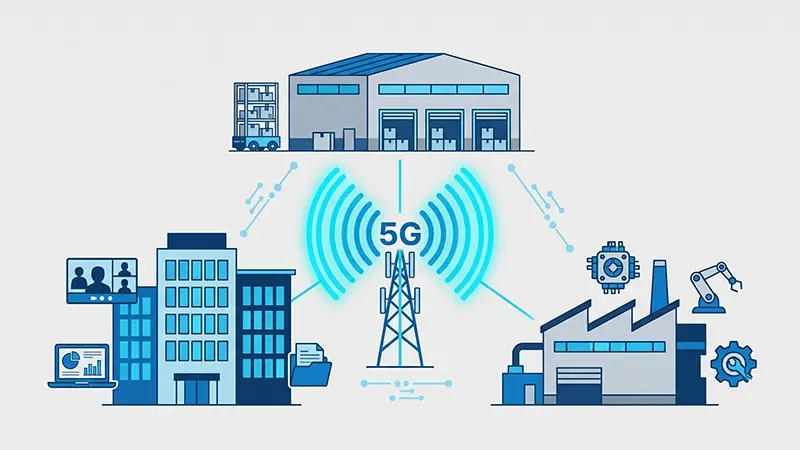
5G for enterprise is not limited to one sector. Any business that relies on real time data, multiple connected endpoints or uninterrupted communication benefits from the upgrade.
Retail and Warehousing
IoT connectivity is where retail and warehouse operations see the biggest change. Inventory sensors, connected POS terminals and stock tracking systems all compete for bandwidth. On a 5G connection, hundreds of these devices stay online simultaneously without congestion.
Remote and Branch Offices
Remote branch connectivity has been one of the hardest problems for multi-location businesses in Pakistan. Branches in areas without reliable fiber have had to settle for slow DSL or unreliable 4G. 5G gives these offices the bandwidth for video calls, cloud access and internal system use without depending on fixed line rollouts.
Manufacturing and Logistics
Factory floors depend on low latency communication between machines, PLCs and monitoring dashboards. Even a few hundred milliseconds of delay can cause errors in automated processes. This is the kind of network infrastructure Pakistani manufacturers need and it ties directly into the structured cabling and ICT infrastructure solutions that Horizon Technologies designs for industrial and commercial clients.
Healthcare and Corporate Offices
Large file transfers, multi department video conferences and always on communication tools run better when the underlying network can handle simultaneous high bandwidth demands without throttling.
Challenges to Plan For
5G coverage in Pakistan is still expanding, so signal strength varies by city and even by neighborhood. Businesses should verify coverage at their specific location before committing.
Older routers, switches and endpoints may not support 5G frequencies, which means hardware audits are a necessary first step. And as more devices connect to one network, network security for businesses becomes critical. Every connected endpoint is a potential vulnerability, so access controls, segmentation and monitoring should be part of any 5G deployment plan.
Conclusion
5G is more than a faster version of 4G for phones. For Pakistani businesses, it represents a practical option for reliable connectivity, faster cloud access and support for growing numbers of connected devices, particularly in areas where fixed line infrastructure is limited or slow to expand.
Businesses considering the shift should start by reviewing their current network setup and device requirements. Contact Horizon Technologies for a free consultation on your network infrastructure needs.
Frequently Asked Questions
1. What is 5G in simple terms?
5G is the fifth generation of mobile networks, built for faster speeds, lower delays and more device connections than 4G.
2. Is 5G available in Pakistan right now?
Coverage is expanding in major cities, but availability varies by area, so confirm signal strength at your location before depending on it.
3. Can 5G replace fiber internet for a business?
In locations where fiber is unavailable or slow to install, 5G serves as a reliable primary connection for offices and branches.
4. Which industries benefit most from 5G?
Retail, manufacturing, logistics, healthcare and multi branch businesses see the strongest gains from 5G's speed and device capacity.
5. How much does 5G cost for businesses in Pakistan?
Costs depend on your provider, plan and hardware needs, so get a coverage and device assessment before budgeting.
6. Do businesses need new equipment for 5G?
Older routers and devices built only for 4G will need upgrading, since 5G requires compatible hardware to take advantage of its speed and capacity.
